A surgical approach developed by Dr. Kalender
Pain-Free Knee Replacement: Dr. Kalender's Approach
Pain-free knee replacement is the surgical approach Dr. Mahmut Kalender has developed and refined over about 10 years, combined with a recovery plan he builds for each patient after reviewing their imaging. It’s designed to reduce pain after surgery, get you walking the day after surgery and protect muscle function, with most patients spending just one night in the hospital.
The surgical approach Dr. Kalender developed himself over about 10 years, with a recovery plan built for your knee: less pain, walking the day after surgery and, for most patients, just one night in the hospital.
- Developed by Dr. Kalender over about 10 years
- Usually one night in the hospital
- Free online review of your X-rays or MRI
Why it matters
Why the first days shape your whole recovery
For many people, fear of pain is the main reason they put off knee replacement, sometimes for years. That fear isn’t unreasonable. When pain is hard to control after surgery, it’s hard to move, and a knee that isn’t moved early tends to become stiff and weak.
That’s the problem Dr. Kalender set out to solve. When pain is lower, you move sooner. When you move sooner, you regain confidence in your new knee, and your recovery has a better starting point.
Lower pain
Move sooner
A better start to recovery
Worried about pain after surgery?
Ask how the first days are planned, on WhatsApp, in English.
The pain-free approach
It's not just about how soon you leave the hospital. It's about how you recover.
Pain-free knee replacement isn’t a single step added to a standard operation. It brings together two things: a surgical approach Dr. Kalender has developed himself, and a recovery plan built around you.
01 · The surgery
A surgical approach developed by Dr. Kalender
Over more than 30 years of knee surgery, Dr. Kalender has developed his own way of performing knee replacement, designed with the first days of recovery in mind. During your consultation, he explains what the approach can mean for you and what you can realistically expect for your knee.
02 · The recovery
A recovery plan built around you
Your pain plan is prepared before surgery, together with the anesthesia team, and most operations are done under spinal anesthesia. You’re helped to walk the day after surgery, and before you leave the hospital you learn your exercises, how to care for your wound and which warning signs to watch for. Your stitches are designed to dissolve on their own, and you receive personalized wound care instructions.
Compared with a conventional knee replacement
How Dr. Kalender's Approach Differs from Conventional Knee Replacement
What the approach aims for:
Less pain after surgery
Designed to keep pain lower in the first days, so you can rest, sleep and move.
Walking the day after surgery
Most patients take their first steps the day after surgery.
Muscle function preserved
The approach aims to protect the function of the muscles around your knee.
Less formal physical therapy for suitable patients
Many suitable patients need little or no formal physical therapy, with home exercises taught before discharge.
Usually one night in the hospital
Most patients go home from the hospital after a single night.
A faster return to daily life
The aim is to get you back to everyday activities sooner than a conventional recovery usually allows.
These are the goals of the approach. Every knee is different, and Dr. Kalender will tell you honestly what you can expect for yours.
Is the pain-free approach right for your knee?
Send your X-rays or MRI and Dr. Kalender will review your case and talk it through with you by video, free of charge.
Your first days
Your first days, step by step
Every recovery is individual, but this is what the first days typically look like.
Everyone heals a little differently. Some soreness, swelling and stiffness are a normal part of healing, and Dr. Kalender explains what to expect for your knee in your consultation.
Before surgery
A full health check, an anesthesia consultation and your pain plan. Your surgery is confirmed only when your doctors agree it’s safe.
Surgery day
Your knee replacement, usually under spinal anesthesia. You’re helped to start moving with support, as soon as your team advises.
The day after surgery
You walk with support, learn your exercises, wound care and the warning signs to watch for, and most patients leave the hospital after this single night.
After you leave the hospital
You continue your exercises and short walks while you rest, with Dr. Kalender’s team checking on your progress.
Flying home: a separate decision
If you’re traveling, Dr. Kalender evaluates whether you’re fit for a long flight, including your risk of blood clots. Your return date is set only after this evaluation.
After you get home
What recovery looks like once you're home
Your knee still needs time to heal, and it helps to know what’s normal.
Walking and daily activities
Many patients use a walker or cane at first and rely on it less over the following weeks. Short, regular walks and your home exercises matter more than long sessions.
Swelling, stiffness and sleep
Some swelling and stiffness are common for several weeks, and sleep can be disturbed early on. Your instructions explain what to expect and when to get in touch.
Follow-up from home
Dr. Kalender’s team stays in touch remotely after you return. We also recommend keeping your local doctor informed.
Questions about recovery at home?
Ask about exercises, follow-up and getting back to daily life on WhatsApp.
Patient selection
Who the approach is right for
A smoother recovery starts with choosing the right patient. That’s why Dr. Kalender reviews every case personally before anyone books a trip, and why he doesn’t operate on everyone who contacts him.
It may suit you if
- Knee arthritis or joint damage limits your daily life despite painkillers, injections or physical therapy
- Your X-rays or MRI show significant damage to the knee joint
- Weight and general health are assessed personally, not by a single number
- Your pre-op checks, including blood tests such as CRP, show no sign of active infection
- You're healthy enough for surgery and, if you're traveling, for a long flight
When another option may be better
If your knee damage is mild, non-surgical treatment may still help, and Dr. Kalender will tell you if surgery isn’t the right step yet. Some health conditions need to be under control before surgery is safe. In that case, he’ll explain what needs to happen first.
Why he developed it
Why Dr. Kalender developed this approach
In more than 30 years of orthopedic surgery, with a practice focused on the knee, Dr. Kalender has seen how hard the first weeks after a conventional knee replacement can be: pain that makes it difficult to move, a slow start to walking and a long road back to daily life. He set out to change that experience, and over about the past decade he has developed and refined the approach he uses today.
There’s a personal side, too. After breaking a bone in an accident himself, he knows firsthand what bone pain feels like.
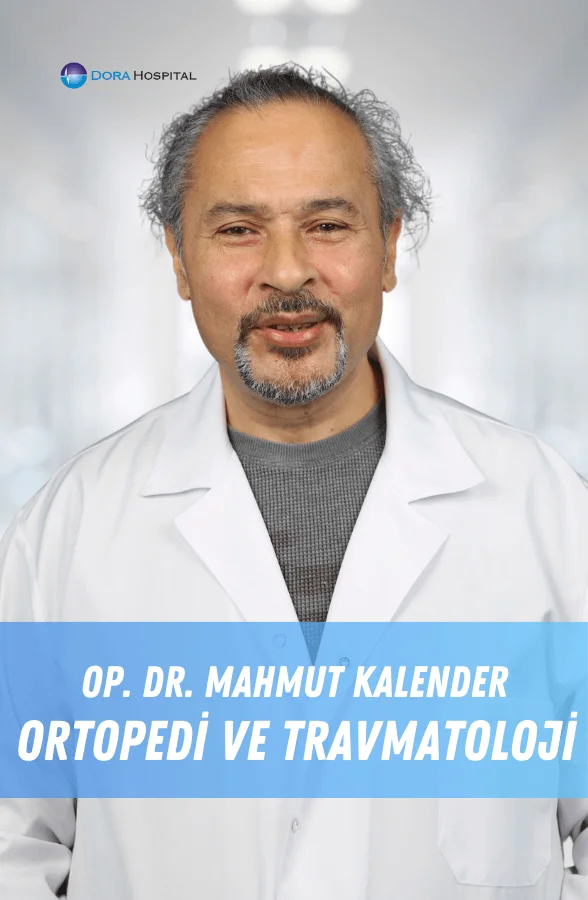
Dr. Mahmut Kalender · Orthopedic Surgeon, Dora Hospital, Istanbul
SLOT: Dr. Kalender video "Why I developed the pain-free approach" [VERIFY]
Want to know if this approach suits you?
Send a message to Dr. Kalender’s team on WhatsApp, in English.
FAQ
Pain-free knee replacement: your questions answered
How much pain should I expect after surgery?
Everyone feels pain differently, and some pain after knee replacement is normal. The approach is designed to keep it as low as possible. Your pain is checked before you leave the hospital, and you go home with a clear plan for managing it. Dr. Kalender will tell you what to expect for your knee.
What kind of anesthesia will I have?
Most operations are done under spinal anesthesia. Your anesthesiologist makes the final decision after your assessment, based on your health and your preferences.
Is the difference in the implant?
No. The pain-free approach lies in how Dr. Kalender performs the surgery and how your recovery is planned around it, not in a single product. He selects the implant for your knee individually and will explain his choice during your consultation.
Will I still need to do exercises?
Yes. Your home exercises are an important part of recovery, and you learn them before you leave the hospital. For suitable patients, the aim is to avoid long, formal physical therapy programs, not to skip movement altogether.
How long will I stay in the hospital?
Usually just one night. Leaving the hospital and being ready for a long flight are two separate decisions. If you’re traveling, Dr. Kalender confirms you’re fit to fly after a medical evaluation.
What if I have more pain than expected after I get home?
Contact Dr. Kalender’s team, who stay in touch after you leave, and see your local doctor if needed. Your discharge instructions also explain which symptoms need urgent medical attention.
How do I find out if the approach is right for me?
Start with a free online consultation. Share your details and any X-rays or MRI, and Dr. Kalender will review your case and discuss your options with you by video.
Free online consultation
Find out if pain-free knee replacement is right for your knee
Send your X-rays or MRI and talk to Dr. Kalender directly, in English, before you make any plans.